October 29, 2026
We sat down with Brian Clancey of Stat Publishing to run the numbers on this season’s global pulse market. He talks us through a smaller North American crop, trade doubts on StatCan’s lentil carryout, and how Canada and Russia are competing for Chinese and Indian pea demand.


Using the government numbers, Statistics Canada's (StatCan) September estimate and the latest USDA estimates, I put gross production of peas, lentils, beans and chickpeas in Canada and the United States at about 9.17 MMT, down 18% from 11.23 MMT last year. A lot of that is area, which was down by almost 1.5 million acres (600,000 ha approx.), and a lot of the crops have smaller average yields.
Everything is down. The biggest percentage decline is in lentils, down 26% from 3.86 MMT to 2.85 MMT. Coloured beans are down 22%, from 1.45 MMT to 1.13 MMT; chickpeas are down 17%, from 818 KMT to 679 KMT; and peas are down 12%.
The coloured bean figure is my interpretation. I use Farm Service Agency acreage data to estimate area by class, then infer production by class from USDA NASS state-level yields. The main reason for the decline is North Dakota, which had poor growing conditions; North Dakota grows blacks, navies and pintos, and a smattering of other classes. Final production estimates for Canada come in December and I don't think the USDA does anything on pulses next month, so it will probably finalise its estimates in January.
No one likes ending stocks when they go against what they'd like the world to be, whether they're high or low. A trader always talks their position, however hard they try not to!
Lentil production is down the most, but supply is only down 6%, from 4.5 MMT to 4.2 MMT. That reflects an abundance of green lentil carryover in Canada and the United States, because last year's green area was so high. Red lentil ending stocks in Canada were only marginally different: I estimated about 342 KMT the previous year and around 360 KMT this summer.
For the trade to say the ending stocks number is too high, you have to believe last year's production, or the previous year's carryover, was too high, and you have to ask what makes one year acceptable and another not.
Before StatCan released its ending stocks estimates, I worked out my own from the data available to me: Canadian Grain Commission weekly data, which gives commercial stocks (it doesn't survey processors, whatever it says), plus inferences about domestic disappearance. I came up with a number very close to StatCan’s.
In a year when many of these commodities are in the bottom half of their historic price ranges, there is a desire to explain that price. Freight costs are higher than normal because of the global problem in the diesel market, and diesel moves everything: farmer to processor, processor to port, port to destination, warehouse and retail. Everyone is paying more and resisting it, so there's a psychological tendency to say the crop isn't there and the numbers are wrong, because farmers don't want to sell. But farmers may not want to sell because their costs are higher than expected at current prices, so their margins have shrunk and they'd rather wait and hope prices, or the diesel market, improve.
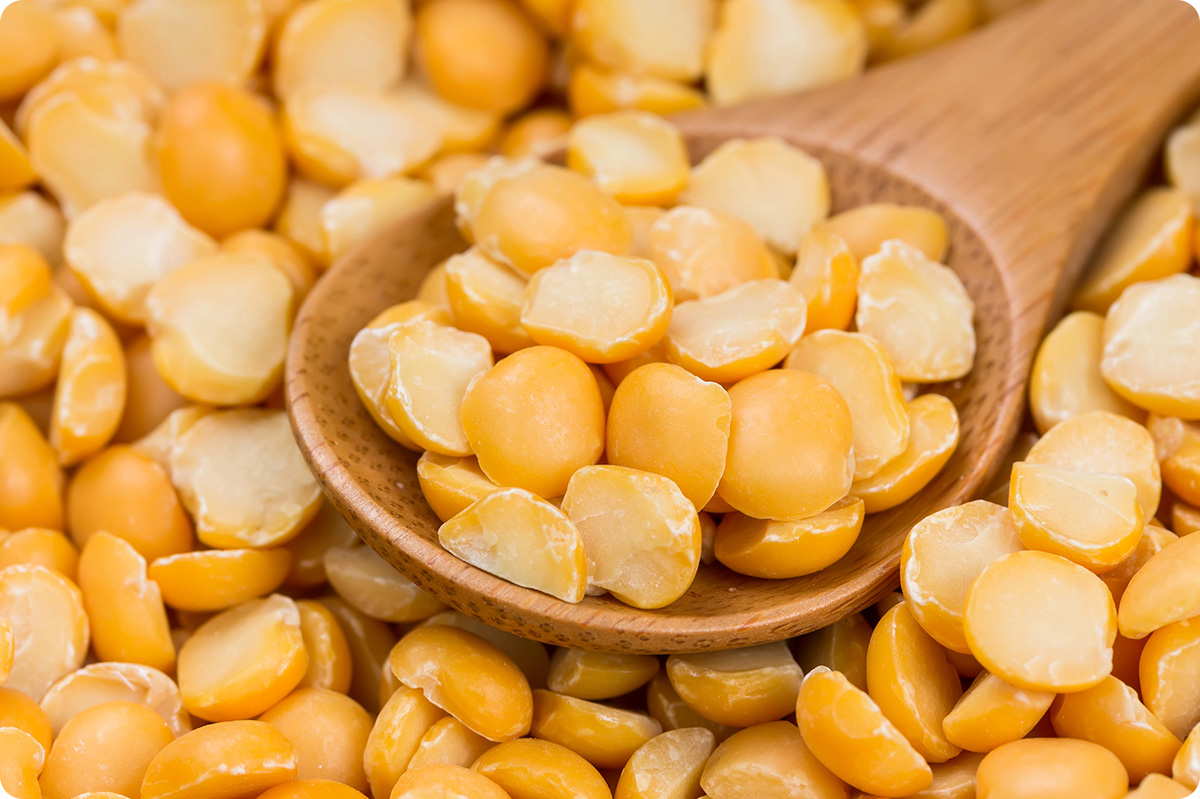
Gross pea imports from China are up significantly and Russia remains the primary supplier, which has a lot to do with feed demand.
I don't think it's a given, but I think it's likely. Canada has decided it should have its own economic policy that isn't tied completely to the policies of another country, and that probably bodes well for a continuation. If buyers in China think there's a risk it won't be renewed, import demand will escalate over the short term to bring in as much product as possible before the expiry date, to avoid paying a higher price.
When Canadian peas faced a 100% import duty, the China sector used Russian peas, and Russian exporters would have gained experience and developed relationships, so they should continue to penetrate that segment. As soon as Canada was back in play, its own movement increased significantly.
From January to August, China imported just over 1 MMT of peas from Russia and 729 KMT from Canada, up from about 500 KMT and 400 KMT in the same period last year. Gross imports are up significantly and Russia remains the primary supplier, which has a lot to do with feed demand.
Years ago, people said China's food sector might top out at around 1 MMT a year; I don't know where it is now, but you can infer that Canada is regaining share of that segment and has clearly lost the feed market, for now.
Russian pea shipments to India from January to August are up 10 KMT on last year at about 231 KMT, while Canada's have gone from 375 KMT to 594 KMT, up about 220 KMT. Canada's market share has risen from 56% to 72%, and Russia's has slipped from 33% to 28%. Less than 1% has come from elsewhere.
The India Pulses and Grains Association hasn't reported any asking prices for Russian or Ukrainian peas for several weeks, only Canadian. A few weeks ago, the spread was tight, with Russia discounted by about $10/MT.
Right now, I think the landed port asking prices for imported lentils are below the minimum support price (MSP), so I don't think it's a factor at the moment. If India doesn't think its rabi lentil crop will be good, there's a disincentive to increase the duty, because that would add to food inflation at a time when it's probably already being affected a little. I'm not getting the feeling a duty increase is in the wind.
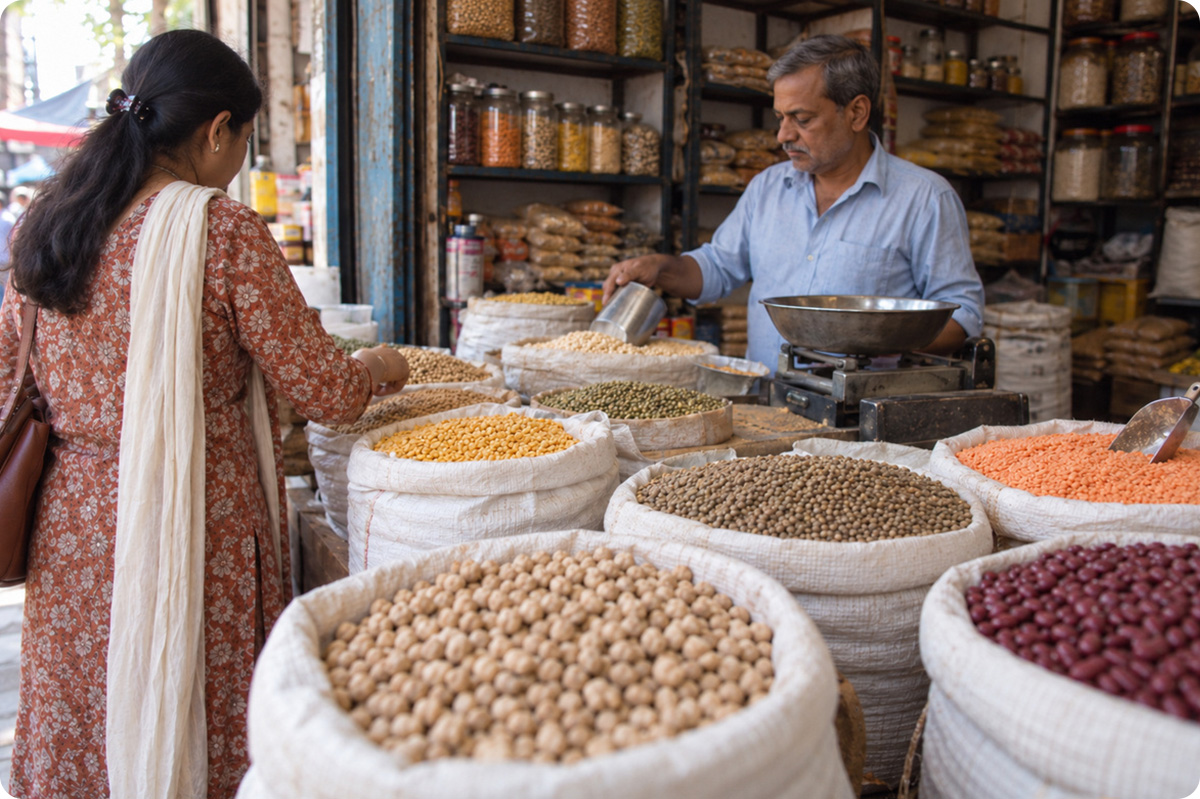
India imported 715 KMT of Canadian lentils between January and August 2026, up from 335 KMT a year earlier, according to figures shared by Brian Clancey.
In Brazil, it's really early; planting is just beginning. For the 2027 calendar year, they think bean area could be up a touch and production down a touch. The National Supply Company (CONAB) is not optimistic about exports, which it thinks could be down next year. This year's carryover is thought to be down at about 99 KMT, from 236 KMT the previous year, so unless Brazil imports more, such as a big import of Argentine black beans plus some white beans, exports would need to be down.
This year's monsoon was below average nationally, and very strongly below average in some areas. Probably the most significant number is water reservoir levels, which are down from a year ago, and I think even a year ago they were below average. Some states are telling farmers not to grow crops that need a lot of water and to grow pulses instead. It remains to be seen how much impact that will have.
Rabi seeding is underway. As of October 23, rabi pulse area was 327,000 ha, against 439,000 ha last year, out of the few million they grow. Chickpeas were at 221,000 ha against 377,000 ha, lentils 27,000 ha against 6,000 ha, and peas 29,000 ha against 8,000 ha. On average, 9% of rabi pulse crops are sown in October, so it's too early to infer anything concrete.
The pigeon pea crop was sown late. Final area is up over last year, which suggests it should be good, but there's an ongoing worry about yields, and when an importing country says it's worried about its production, you have to pay attention — it has an incentive to say the opposite.
On lentil imports, Indian arrivals from Canada through August were 715 KMT, a 59% market share, compared with 335 KMT and 48% last year. Australia, the other main supplier, shipped 442 KMT for a 36% share, against 291 KMT and 42% last year. Most of Canada's shipments will be red, and you can assume all of Australia's are. Green lentil shipments from Canada could be up this year because of the worries about the pigeon pea crop. Russia is also offering lentils into India, and if they're large greens, I suspect they're undercutting Canada by a huge margin, but it has shipped only 39 KMT so far in 2026 against 6 KMT last year.

Lentils / Dry peas / Dry beans / Chickpeas / Canada / United States / Russia / China / India / Brazil / Pulse production / Pulse trade


Disclaimer: The opinions or views expressed in this publication are those of the authors or quoted persons. They do not purport to reflect the opinions or views of the Global Pulse Confederation or its members.