November 18, 2026
Pigeon pea prices in East Africa have climbed to their highest level since 2024, as short crops in Mozambique, Tanzania and Malawi coincide with a drought-hit tur crop in India. Farmers have good reason to plant more when seeding begins in January, but another dry season could place serious limits on overall yields.

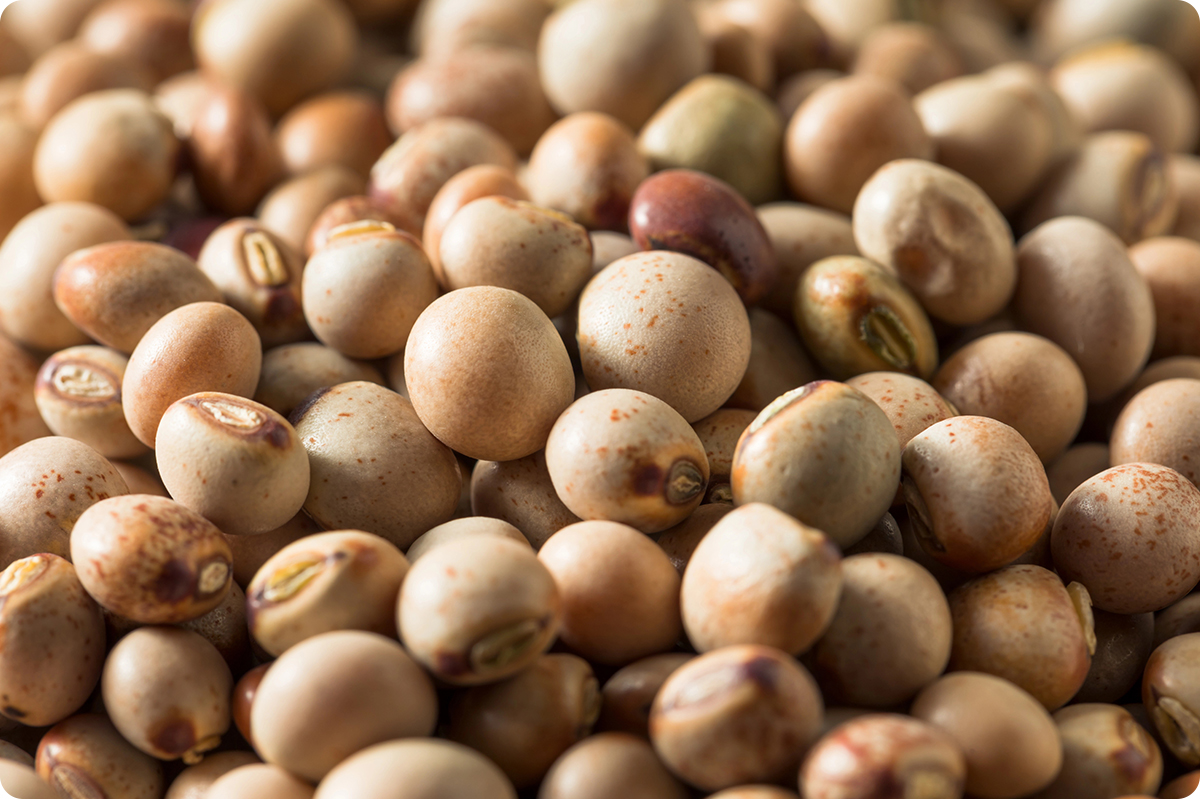
East African pigeon peas are largely grown for export, with farmers in Mozambique, Tanzania and Malawi producing largely for Indian buyers.
El Niño has already had a negative impact on this year's harvest. "Mozambique and Tanzania's crops were 30% smaller than last year," explains Jahid Nagarwala of Alpha Group, a Dubai-based trader.
The shortfall comes after several years of expansion. According to Nagarwala, planting area has "increased significantly in all three countries" since India allowed pigeon peas to be imported freely, with Mozambique seeing the biggest increase. In Tanzania, production rose from approximately 90 KMT in 2021 to 307 KMT in 2024/25, according to the Cereals and Other Produce Regulatory Authority (COPRA). In August 2025, COPRA projected a 400 KMT crop for 2025/26.
Old-crop supply is now tighter than a year ago. East African arrivals normally run from August to November, and slow logistics and port congestion tend to stretch shipments into December and January. "Because production was poor this year, there isn't much cargo left in stock at origin or in the shipping cycle compared with last year," says Nagarwala. "However, it still represents approximately 150–200 KMT across all zones."
Mozambique Gajri pigeon peas reached USD 930/MT CNF India for November/December shipment on 12 November, up from USD 890/MT on 29 October, according to the GPC's 13 November Pulses Price Report. Over the same period, Malawi red pigeon peas rose from USD 855/MT to USD 915/MT.
August saw the beginnings of a price rally. In July, Mozambique pigeon peas were trading at approximately USD 580/MT and Malawi at approximately USD 520/MT, which puts the rise since then at approximately 60% and 75% respectively.
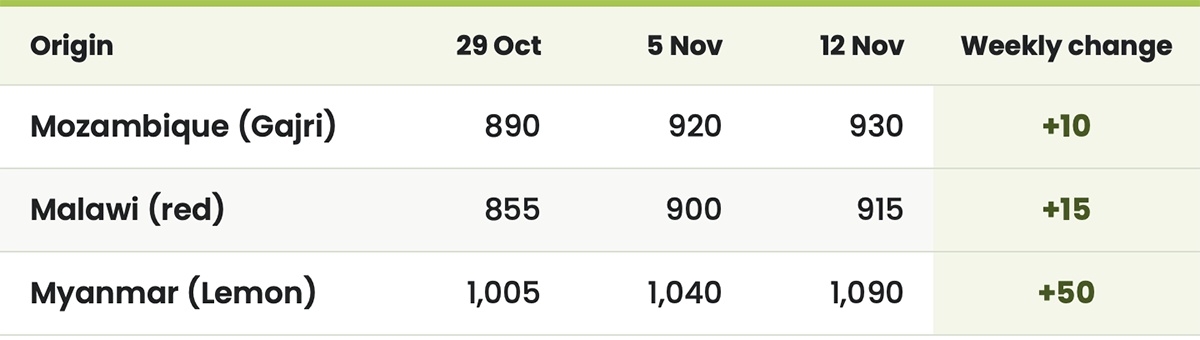
Pigeon pea prices, 29 October - 12 November. Source: GPC Pulses Price Report.
Jahid Nagarwala says prices had been too low for too long. "Last year, East African prices were really undervalued. In November 2025, they traded at around USD 580–650/MT CNF, which was at least USD 100/MT below fair value. Now prices are firm at up to USD 880–950/MT CNF, due to short production across Africa and in India."
Back in early October, it seemed that Indian buyers were already feeling the price changes. Bimal Kothari, chairman of the India Pulses and Grains Association (IPGA), said African tur prices had risen by approximately INR 10/kg, from approximately INR 65/kg to INR 70–75/kg, as crops came in smaller than the trade had expected, according to Sangri Today.
African supply also remains cheaper than Myanmar's. According to the GPC's Pulses Price Report, lemon-type pigeon peas from Myanmar reached USD 1,090/MT CNF India on 12 November, approximately USD 160–175/MT above the African origins.
India's monsoon brought 87% of normal rainfall between June and September, a level the India Meteorological Department classifies as “deficient”. Karnataka received 35% less rain than normal, and Maharashtra 18.8% less up to 18 September. Together, the two states reportedly grow around two-thirds of India's tur.
In general, traders expect a significantly smaller crop than the government. In recent conversations with the Pulse Pod, Indian pulse analyst G. Chandrashekhar put the 2026/27 tur crop at 3.0–3.2 MMT, and Shyam Narsaria of Arvee International at 2.0–2.5 MMT, against a government target of 4.0 MMT and last season’s 3.59 MMT.
Domestic prices appear to have responded to the projected shortfall. Desi tur in Akola traded at INR 10,725/quintal on 13 November, against INR 7,025/quintal a year earlier, a rise of 53%, according to IPGA figures reported by Rural Voice.
Imports were already rising before the size of the new crop was known. India imported 579 KMT of pigeon peas in January–July 2026, up 44% from 401 KMT a year earlier, according to Sangri Today. Mozambique supplied 218 KMT, Myanmar 135 KMT and Tanzania 104 KMT.
The shortfall may not be limited to tur. "Import requirements could rise beyond the direct production shortfall as processors substitute lentils for portions of tur, moong and chickpea demand to maintain plant utilisation," Harsha Rai of Mayur Global told the Pulse Pod recently. "The real import risk lies in simultaneous pressure across India's pulse basket, not simply a shortfall in one crop."
Tur remains free to import, with no duty or quantity limit, until 31 March 2027, and Rai expects that to continue. "For tur and urad, I see a greater likelihood of duty-free imports being extended beyond March 2027, particularly if domestic availability remains constrained," she said.
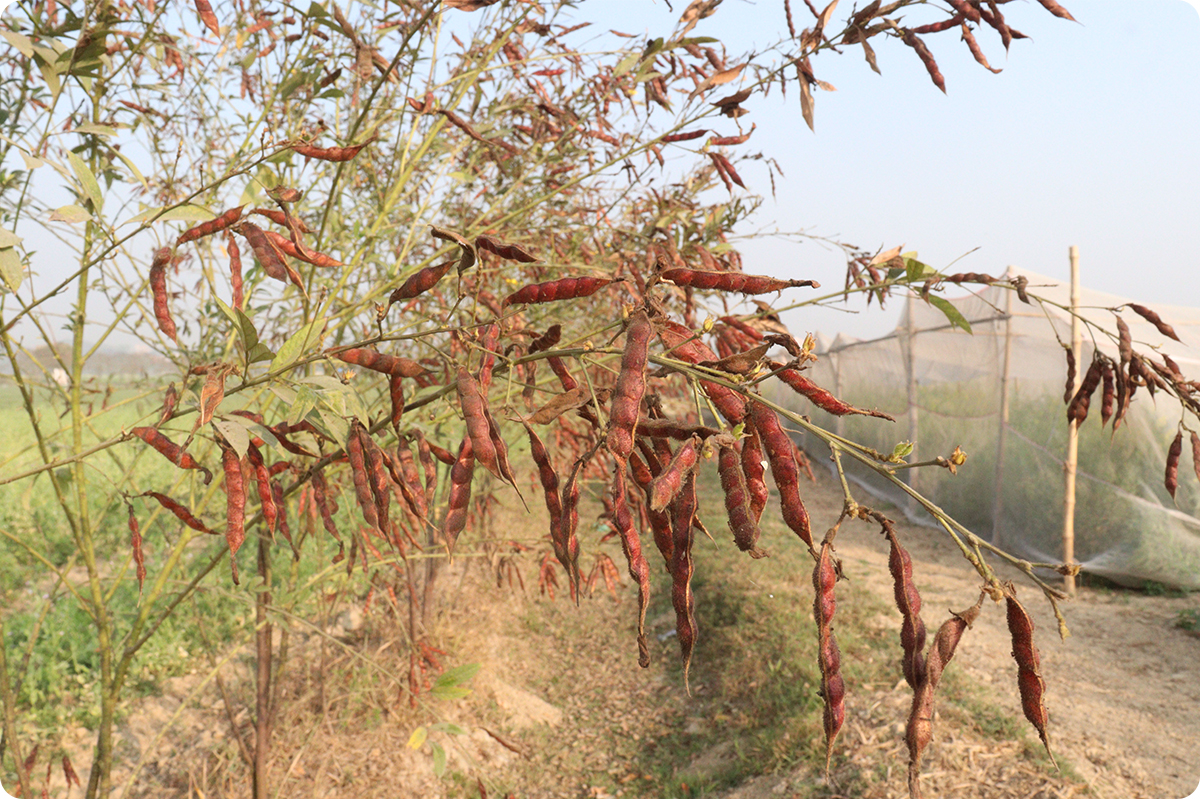
Mozambique and Tanzania recorded crops around 30% smaller than the previous year, tightening supplies across East Africa.
For East African farmers, India remains the absolute focal point of their exports. "The Indian market has always seen African pigeon peas as a cheaper option than its own locally produced pigeon peas," says Jahid Nagarwala. "African pigeon peas have been in high demand in India for many years, and honestly, our African farmers grow pigeon peas only for India."
India's demand has not changed, but the value of each tonne has. "Poor production in India has added very good value to our pigeon peas, which directly benefits African farmers," Nagarwala says. "This will encourage them to boost production next year."
Governments in the region are also supporting the trade. In April, Malawi raised its minimum farm-gate price for pigeon peas to 1500 Malawian kwacha (MWK)/kg for the 2025/26 season, from MWK 1,100/kg the year before. In Mozambique, the Cereals Institute (ICM) has invited exporters to register for pigeon pea shipments to India for the 2026–27 season.
Seeding will follow the rains. "Pigeon pea seeding in Mozambique and Tanzania normally starts in January, once the official rains begin at the end of December or in January," says Nagarwala. "Malawi follows a very similar pattern."
The weather is the main risk. With regional forecasters expecting El Niño to bring below-average rain to much of Mozambique and southern Malawi this season, while Tanzania is expected to be wetter than normal, farmers are relying on a long planting window. "Farmers can tolerate the rain cycles for a certain time," Nagarwala says. "But if El Niño brings dry weather for a long period, all three major producing countries will have a disaster in pigeon pea production for the 2027 crop, as all production is rain-fed."
Right now, the market appears to be pulling in one direction, with India's crop short and African stocks lower than last year. Prices are well above where they were a year ago, but whether farmers can turn that into a bigger crop in 2027 will depend greatly on favourable rains during the key period between January and March.

East African pigeon pea market / pigeon pea prices / India tur production / Mozambique pigeon pea exports / El Niño weather impact / global pulses trade.


Disclaimer: The opinions or views expressed in this publication are those of the authors or quoted persons. They do not purport to reflect the opinions or views of the Global Pulse Confederation or its members.