July 2, 2026
Can the country secure its role in one of the world's most competitive demand hubs? Ahead of the Qingdao Pulses Congress, we spoke with Fede Castellini of Southern Seeds Production, one of Argentina's key pea suppliers to China. He discusses stocks, planting intentions, the competitive edge, and what traders can gain from meeting in Qingdao.


Right now we are in the seeding season here for the new crop, and we will be until July. It's the period of the season where decisions about area are being made, and in the next few months we'll have a better picture of the area we're going to have registered for the new campaign.
Due to the large global stocks for peas and Argentina's previously bumper campaign in 2025/2026, there's less incentive for farmers to plant peas this year. Last year we saw between 380 and 400 KMT of peas here in total. As a result, we have significant stock and we're expecting a significant reduction in production this year.
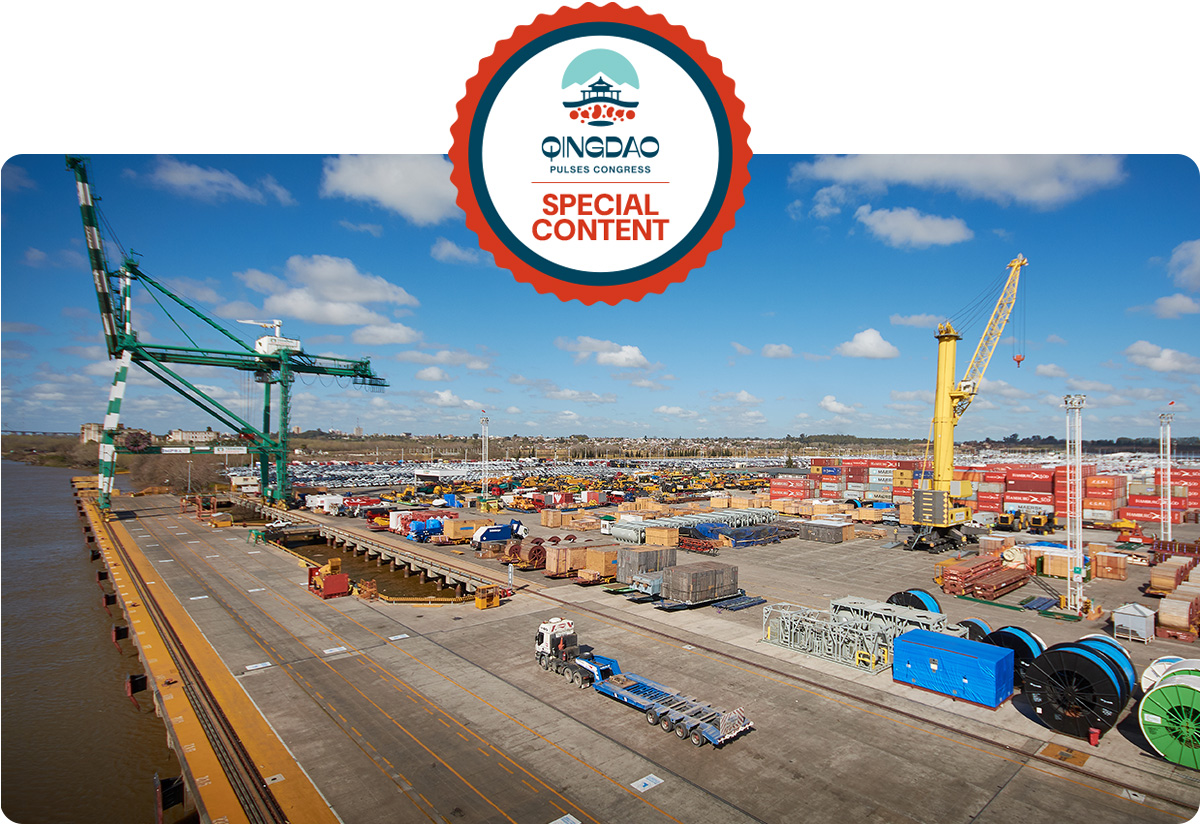
Argentina’s competitive edge in peas lies in logistics and flexibility, allowing exporters to respond quickly to shifting demand from key destinations such as China, Africa, and Europe in a highly volatile global market.
The crop is usually ready to ship from November onwards, and the New Year started with positive exports between November and March — mostly to China and Africa. Now we've been noticing a significant depression of demand since the repeal of China’s tariffs on Canada, with around 72 KMT of crop remaining from the most recent harvest.
It's important to note that Argentina's average production is normally a bit over 200 KMT, so last year's was nearly double, basically two harvests in one year. The reduction is going to be significant this year due to the combined effect of this extra large crop and global production/demand. It looks like a drastic reduction, but actually it's just a return to the average.
We don't have concrete data yet on how much it's going to reduce by, but we'll get a better picture over the course of the sowing period. What we do know is that we've seen a significant drop in demand for pea seed from farmers.
Right now, conditions are fine, but with El Niño forecast now for the second half of the year, we could see conditions intensify. We'd potentially start questioning if there will be issues during the threshing period of the harvest. That's where there could be some issues.
The main problem isn't so much quantity as quality, as extreme conditions and extra rainfall during those final harvest periods could have an impact on the quality of the crop.
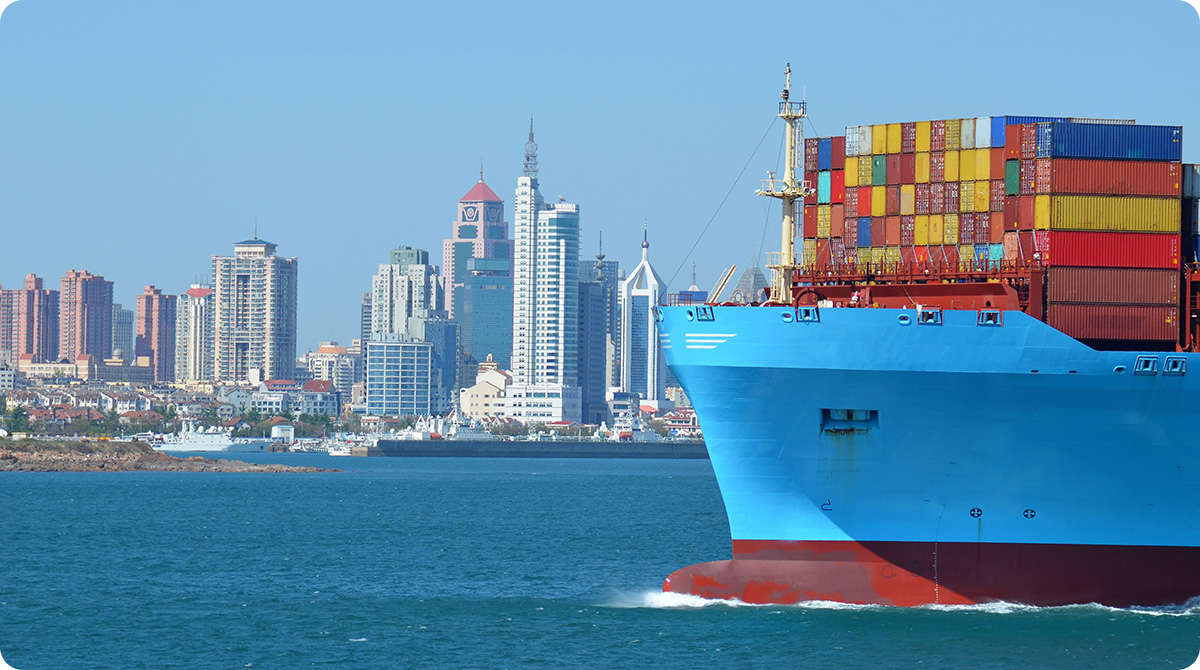
China remains the central demand hub for global pea trade, shaping export flows and competition among origins as suppliers adapt to shifting market access, pricing dynamics, and logistics efficiency.
The type of competition will vary according to the origin. Canada is obviously going to position itself on both quality and price, and I think the Black Sea region continues to be mostly a prize competitor.
The Argentinian opportunity lies in logistics. Argentina is a very dynamic origin when it comes to quickly loading cargo, and in today's world, logistics matter. We are able to step in and supply markets whenever an opportunity arises.
Canada has had the Chinese tariffs reduced, and since then it's been able to get their stock moving again. They also had competition from Russia, but Argentina can also be a player in the Chinese market. When Russia comes in with more aggressive pricing, it also affects us in terms of our ability to continue exporting volumes to China.
Our exports into China began as an opportunity when the tariff situations arose, and we've been able to step up to supply China during that period, but we've also managed to improve our quality standards and process standards, adapting them to the needs of the Chinese market. Here we see ourselves as an origin that will keep supporting China and growing as long as there is an opportunity.
We've exported a good share of this new harvest into Africa, and I'd say it's a market that's well supplied right now. We’ve also seen some targeted demand into Brazil. The European markets, like Italy, are a little slower — the heat and weather are likely having something of an effect there on demand.
With plenty of stocks worldwide, buyers can pick and choose their supplier, but I'd say Argentina started with exports at a good pace until March, when the tariff reductions came in.
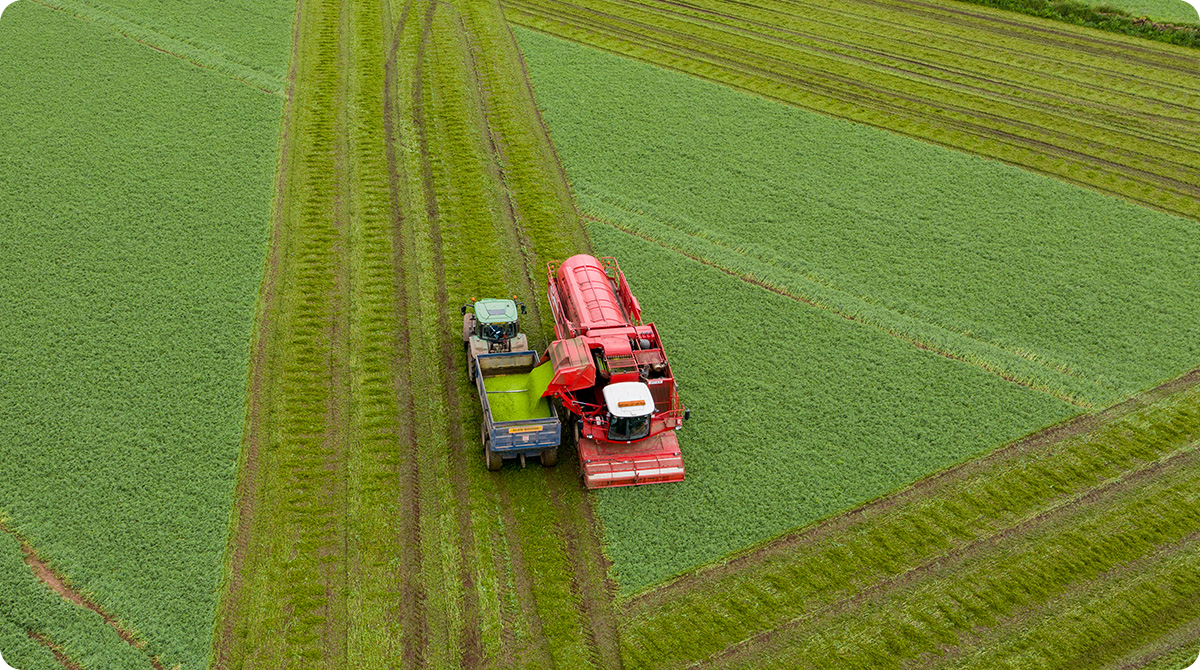
Argentina is heading into a new pea planting cycle after a record 2025/26 harvest, with production expected to return closer to average levels following a season of unusually high output and strong export activity.
We've just worked on the Orlando conference in May, and the benefits are really similar for China. The GPC conferences are very important because they bring together the main players in our market. You can find demand-side players as well as producers from all over the world.
It gives you information to help you make forecasts in such an unpredictable market that is 100% supply and demand — this means the main markers are price, the status of available in-country product and its quality, the weather, and a range of other issues that you can understand better at a convention that lets you make face-to-face contact with your clients.
It's not just about the origins either, it's also about the current situation for people who consume the products we export. Being in the country and speaking with locals provides a wealth of knowledge for any players working in that market.

Qingdao Pulses Congress / Argentina pea exports / China pea market / dry pea trade / global pulse trade / agricultural commodities / grain logistics / international trade flows / pea industry outlook.


Disclaimer: The opinions or views expressed in this publication are those of the authors or quoted persons. They do not purport to reflect the opinions or views of the Global Pulse Confederation or its members.