June 15, 2026
Global players assess the preparations and potential impact of a so-called ‘super El Niño’ in 2026. From India’s plans for protecting supply to unpredictability in the US bean states and how Australia may sidestep the drought with punctual winter seedings, the race to stay ahead of the weather is underway — and no major pulse-producing region will be untouched by the challenge.

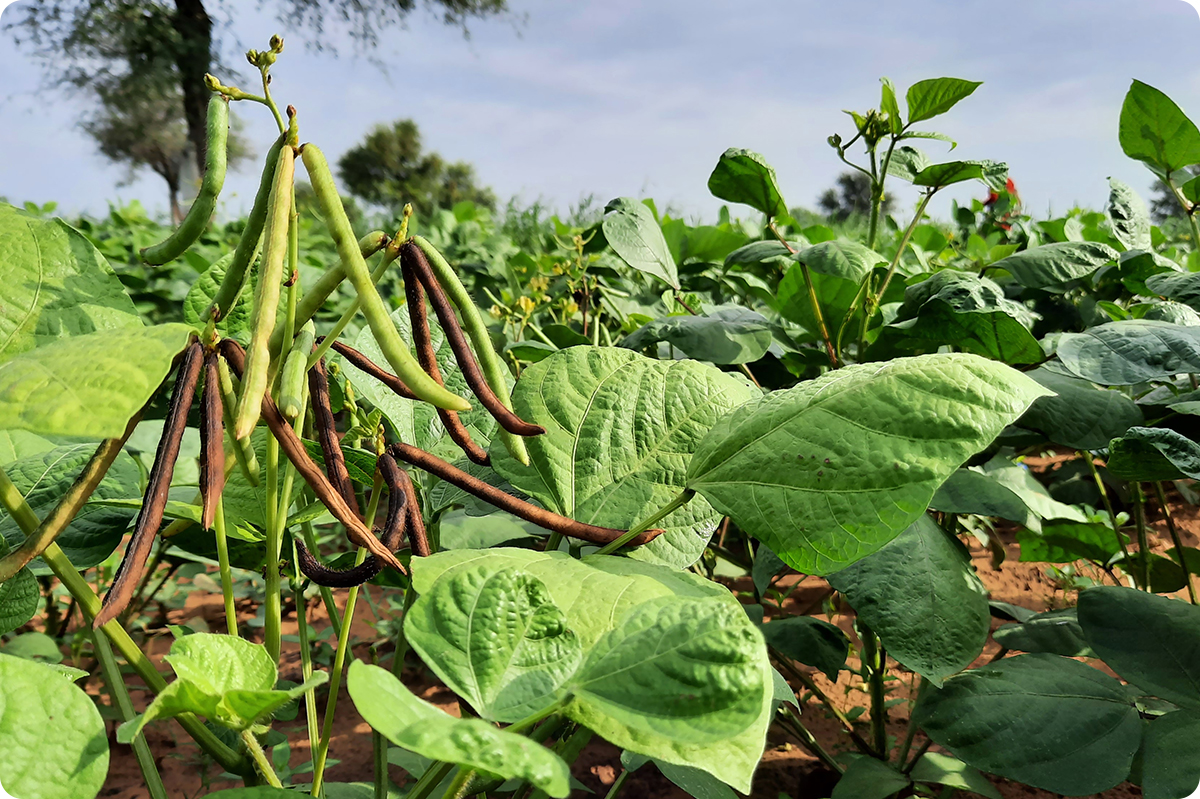
India has opened imports of pigeon peas and black matpe through March 2027 while supporting farmers with seeds and agronomic guidance as concerns grow over the potential impact of a strong El Niño on Kharif pulse production.
Reading the headlines of late, many farmers and traders will be asking themselves the same question: what, exactly, is a ‘super’ El Niño?
Each of the El Niño-Southern Oscillation (ENSO) phases — Neutral, El Niño, and La Niña — bring their own unique weather patterns. A neutral year typically means more stable, reliable weather. A La Niña year — as seen in 2024 and 2025 — means Australia, South East Asia, and India typically see increased rainfall. An El Niño year, as we’re predicted to see in 2026, generally means the inverse of La Niña, threatening droughts in Australia, a suppressed monsoon in India, and a drier, hotter summer in the Northern USA, Canada, and Europe. For an El Niño event to (informally) be seen as ‘super’, it must fall into the World Meteorological Organization (WMO) category of ‘very strong’ - something that has only happened five times since records began in the mid-20th century.
The European Centre for Medium-Range Weather Forecasts (ECMWF), a key authority on El Niño predictions, expects it to begin and meet the ‘very strong’ threshold over the coming months. As is often the case in the pulse industry, questions now arise about the impact on the ongoing pulse crops this summer and the consequences it could have for the global supply picture. We took a look at the growing regions that might be affected, and how El Niño may influence regional production and stocks.
India's Kharif pulses are now being seeded and the southwestern Monsoon is in full flow. The key pulses to consider in the Kharif crop – black matpe, green mung bean, and pigeon peas – are vital as staple crops for the Indian population and highly sensitive to dips in production. The last and strongest El Niño on record was in 2015/2016, which caused drought-like conditions across India with deficits against the long-period average (LPA) in key growing areas, such as Andhra Pradesh (40% below LPA) and Karnataka (24% below LPA) with the season ending on a 14% deficit nationally.
According to a 2022 study, the shortages caused by the 2015/16 El Niño, prices for black matpe and chickpeas to skyrocket by 45% and 35%, respectively.
Facing the prospect of another strengthened El Niño year, how prepared is the Indian market for a potential decrease in production?
Firstly, Agribusiness Journalist, G. Chandrashekhar suggests exercising caution around this year's weather predictions, describing the ex
The Indian Meteorological Department has made a prediction that the Monsoon will be 90% of the LPA. However, in Chandrashekar’s view, the amount of windfall may not be the key factor for strong crops: "What is crucial is not the total quantity of rainfall at the end of the season, but the distribution — the temporal and spatial distribution of rainfall between June and September. We don't really know how it is going to pan out over the next four months.”
Chandrashekar does believe that the markets have factored in the possibility of a deficient or poorly distributed monsoon and that preparations have been made. “As a nation, India has prepared,” he says. “The Agriculture Ministry has prepared district-wide plans and is supporting farmers with high-quality seeds and advising them about agronomic practices. But El Niño is definitely a threat — it is going to create soil moisture deficits. Soil moisture conditions are already less than satisfactory because of a severe heat wave over the last six to eight weeks. Therefore Kharif crops are likely to be affected.
“It is too early to talk about the extent of the loss that India may suffer in pigeon pea, black matpe and mung, but the market has realised, recognised and understood the severity of the situation. That is why the Government of India has allowed free import of black matpe and pigeon pea until March 2027.”
On top of the opening up of imports of black matpe and pigeon peas, India has set high targets for their own production. Despite the risk of El Niño damage the government of India has set a target of four MMT of pigeon people production compared to between 3.3 and 3.5 MMT last year. For this year’s Kharif season the target for Black Matpe is 1.45 MMT – between 200-400 KMT higher than the last two years' totals.
However, G. Chandrashekar describes these figures as “ambitious” and says he has "serious doubts” about achieving these targets in an El Niño year.
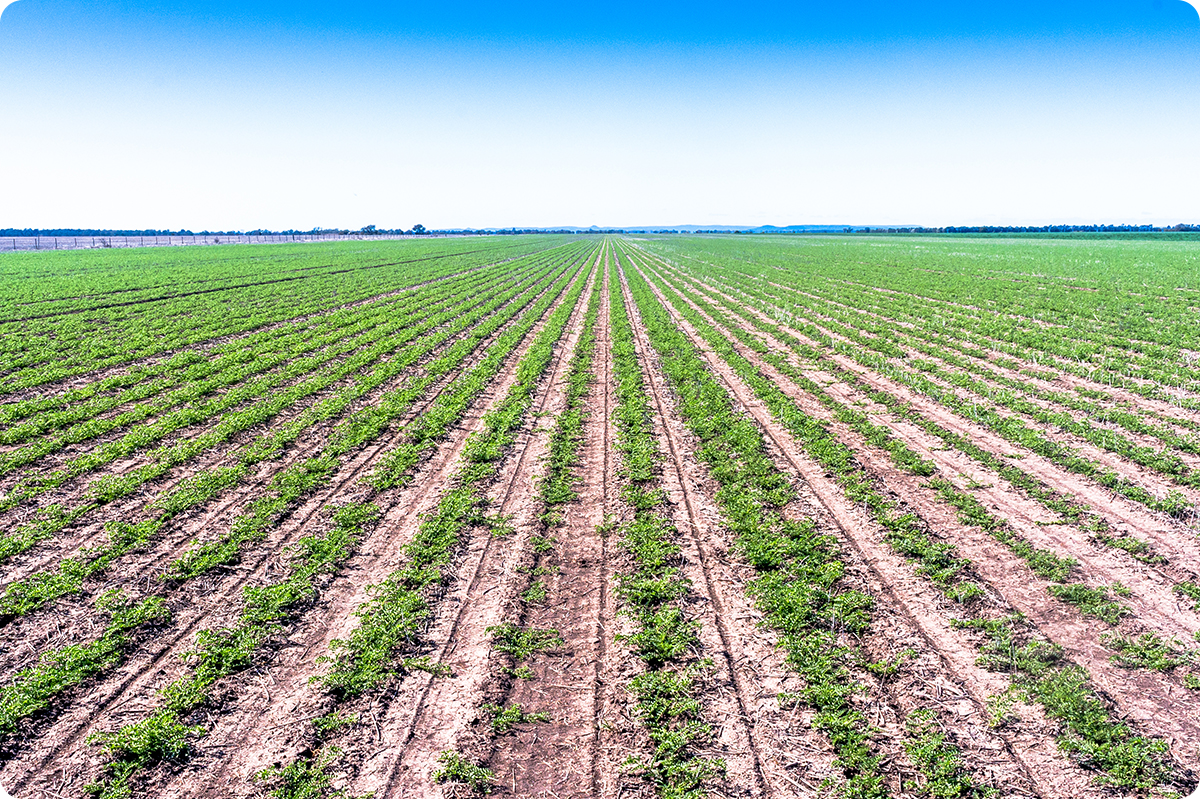
Australian growers entered the winter cropping season with favourable planting conditions, raising hopes that timely seedings and strong crop establishment could soften the impact of a drier El Niño pattern later.
Moving across Asia out to the Pacific Ocean, Australia is another key area for El Niño related issues for pulses. The last El Niño year where similar issues were forecast was 2015/16, during which desi chickpeas took a big hit due to reduced rainfall.
According to a Saskatchewan Pulse Growers report at the time, limited rainfall fell from mid-August and southern Queensland and northern New South Wales saw a lower production of chickpeas and faba beans as a result. The following year in 2016/17, the chickpea crop was approximately double the 2015/16 crop, and was seen as a bumper year, especially in comparison with 2015/16’s drastic downturn.
This year the threat of drought and high heat looms once more.
In spite of the predictions, Peter Wilson of the Grains Australia Pulse Council describes himself as “cautiously optimistic” about Australian seeded area and production this year, but is wary that El Niño could have an impact.
“If the El Niño forecast comes to pass, it will mean a drying trend as we move into the season and get closer to that critical spring reproduction phase. I'm prepared to say that farmers throughout Australia who want to sow a winter crop will actually be able to sow that crop. We will get a nicely established spread of crops that are going into the ground bang on time. This is significant as it will have the opportunity to get established with good moisture nice and early with limited evaporation threats. Any future falls of rain will continue to build and be available to the plant.
“This situation will then ensure that, whilst El Niño might dry us out in the end, crops and farming practices should allow for a muted impact in the aggregate.”
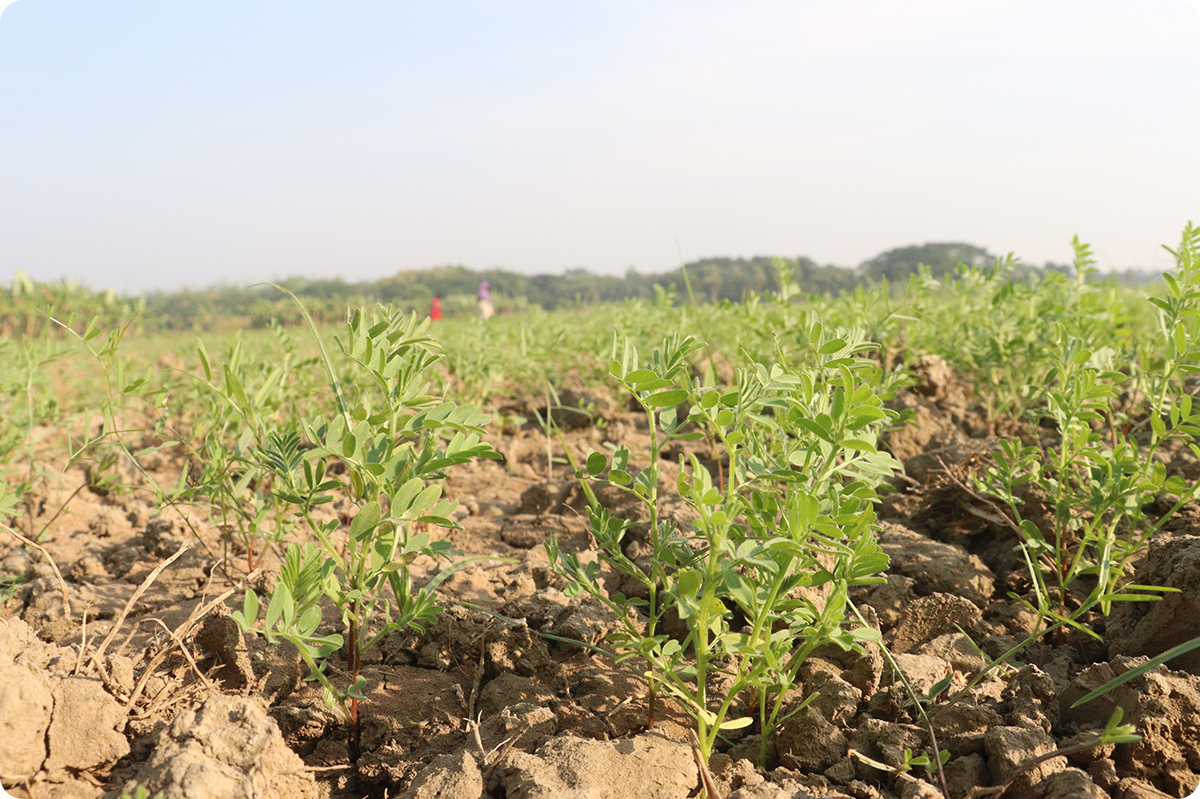
Pulse-growing regions of the northern United States could benefit from additional heat and moisture during an El Niño year, although growers warn that flooding, storms and other weather extremes may bring localised losses.
The effects of El Niño are less straightforward in other parts of the world. In the USA, an El Niño year generally brings vital warmth and moisture, but they don't always come in the right order, at the right times, or without unwanted surprises.
“With higher heat and moisture comes higher volatility and we're already seeing some of that, " explains Dylan Karley of North Central Commodities in North Dakota, "We started cool/wet then went into a hot/wet cycle and now it's setting up to be a bit uncertain. It should benefit crops in the pulse-growing areas overall but will also lead to localised losses due to weather extremes.”
Karley warns that storms and heavy rainfall can lead to flooding during an El Niño year.
“If it (El Niño) ends up amplified this year in particular, we could see some good and some bad. Heat and moisture are positives for plant growth but most pulses are a little more finicky than other crops. Too much of a good thing can cause problems in a hurry as well.
“We've already seen a 5% loss of planted acres in my very localised area due to overland flooding shortly after emergence. That's not unheard of around here, but it's definitely a wake-up call that we could be in for a wilder ride than normal, good and bad.”
Other areas around the world that grow pulses may also see the ripple effect of El Niño on their weather and agriculture. The ECMWF has predicted ‘bone-dry’ conditions for the Manchurian Plain where, according to last year's USDA China pulses report, a large quantity of Mung and Adzuki beans is produced.
Depending on the region, some pulse crops in Brazil may see improvements in overall moisture if El Niño arrives at the right time. The third bean crop is currently in the ground, but much of this is irrigated. The first bean crop of the 2026-2027 season will be planted between August and October, and may benefit from increased rainfall.
Whilst there is accumulating evidence for a very strong El Niño this year, it should be noted that these predictions do not always come true.
The ECMWF themselves admit that their models have an inherent uncertainty when judging an El Niño year and its potential strength. In 2014, forecasters predicted a super El Niño that ultimately failed to materialise, serving as a reminder that the gap between forecast and reality can be significant. However, on June 11 the national oceanic atmospheric administration (NOAA) also projected a 63% chance of a very strong El Niño in the months to come, so a consensus of sorts appears to be gathering.
For now, the prudent approach for traders and growers alike is to plan for disruption without certainty of the outcomes, watching the monsoon’s early progress in India and soil moisture data in Australia, as they could be the clearest early signals of how the season will unfold.

El Niño 2026 / extreme weather / climate change / food security / pulse crops / agricultural production.


Disclaimer: The opinions or views expressed in this publication are those of the authors or quoted persons. They do not purport to reflect the opinions or views of the Global Pulse Confederation or its members.