January 20, 2026
As negotiations around a long-pending USA–India trade agreement continue, pulses have unexpectedly emerged as a point of discussion. Media coverage has framed India’s 30% import tariff on pulses—particularly yellow peas—as a trade measure directed at the United States, with several reports suggesting the move risks derailing broader bilateral talks. But a closer examination presents a more nuanced picture.

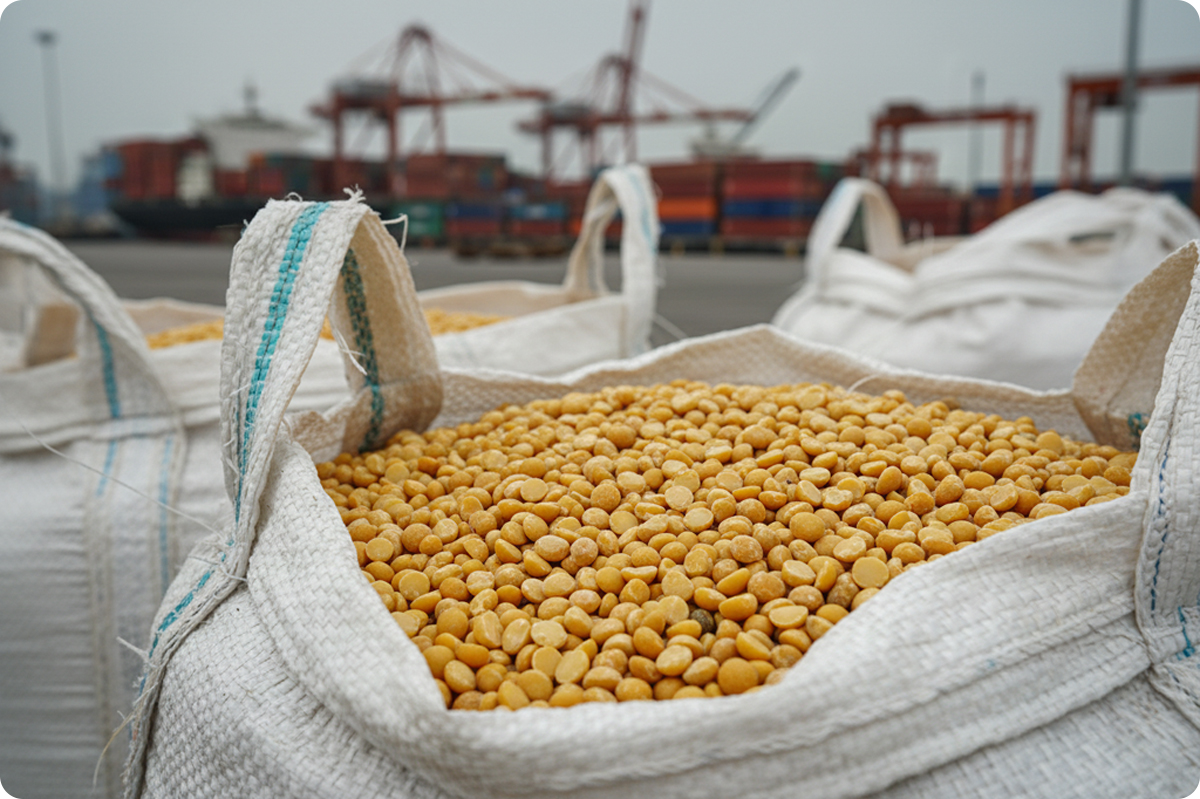
Yellow peas are at the centre of recent media coverage around USA–India trade talks, following India’s 30% pulse import tariff, even though the measure applies uniformly across all exporting countries.
Several outlets have reported that India imposed a 30% tariff on US-origin pulses, prompting political pushback from American lawmakers. The Logical Indian notes that two Republican senators from North Dakota and Montana wrote to US President Donald Trump, urging him to intervene and seek a rollback of what they describe as “unfair” tariffs on American pulse exports. The report highlights concerns from US farmers who view India —the world’s largest pulse consumer, accounting for roughly 27% of global consumption— as a critical export market.
Similarly, NDTV reports that the senators argued US pulse producers face a “significant competitive disadvantage” following India’s announcement on October 30, with the tariff coming into effect from November 1. The article links the tariff to broader US–India trade tensions, recalling that pulses had also featured in negotiations during Trump’s first term, including discussions surrounding the 2020 trade talks.
Coverage from Angel One echoes this framing, describing the tariff as a “silent” move amid ongoing trade deal negotiations and noting concerns from American lawmakers representing pulse-producing states such as North Dakota and Montana.
Across these reports, a common narrative emerges: India’s tariff is portrayed as a response that disproportionately affects the United States at a sensitive moment in bilateral trade discussions.
What is largely missing from this coverage is a key policy detail: the 30% tariff on yellow peas applies equally to all exporting countries, not just the United States. India’s decision was not country-specific, nor was it framed officially as a retaliatory measure against any single trading partner.
According to trade policy explanations cited by USImportData, the tariff consists of a combination of basic customs duty, Agriculture Infrastructure and Development Cess (AIDC), and applicable surcharges. Crucially, these duties were imposed uniformly across origins as part of India’s long-standing approach to managing domestic agricultural markets, particularly for politically sensitive staples such as pulses.
India has historically adjusted pulse import duties in response to domestic supply conditions. When imports surge and domestic prices soften, tariffs are raised to support farmer incomes; when shortages emerge, duties are reduced or suspended to stabilise consumer prices. In this context, the 30% tariff reflects domestic market management rather than a targeted trade action.
The distinction between a country-specific tariff and a uniform tariff is not semantic — it materially changes how the policy should be interpreted. While US lawmakers have raised concerns about market access for American pulses, the policy itself does not single out US exporters. Instead, the current discussion stems from the fact that pulses are now intersecting with broader trade negotiations, prompting political advocacy from regions where pulse exports are economically significant.
As The Logical Indian observes, analysts have described the tariff as a “quiet” or “silent” response, but this interpretation largely reflects the political reaction in Washington rather than a formal trade posture from New Delhi.
Trade data adds further context to the discussion.
Green lentils: between 2020 and 2024, average annual US exports of green lentils to India stood at approximately 21,000 tons. In 2024, however, exports rose sharply to 64,000 tons, more than 200% above the five-year average. Green lentils are commonly used in India as a substitute for pigeon peas, and reports of crop damage in India’s recent pigeon pea harvest suggest that import demand for substitutes could remain elevated.
Yellow peas: India reopened yellow pea imports in late 2023. In calendar year 2024, US customs data shows that the United States exported approximately 19,000 tons of yellow peas to India out of total exports of around 240,000 tons, meaning India accounted for roughly 8% of US yellow pea exports that year. In contrast, between January and October 2025, India imported approximately 940,000 tons of yellow peas in total. Of this volume, around 920,000 tons originated from Canada (590,000 tons), Russia (268,000 tons), Latvia (34,000 tons), and Argentina (26,000 tons). The remaining 20,000 tons came from other origins, including the United States. These figures indicate that the USA was not a major supplier of yellow peas to India in 2025, even before the tariff became effective.
Green peas: average annual Indian imports of US green peas between 2020 and 2024 were approximately 2,000 tons, a level that remained largely unchanged in 2024.
Other pulses: for black beans, pinto beans, dark red kidney beans, and light red kidney beans, India does not feature among the top five export destinations for the United States, suggesting limited exposure in these categories.
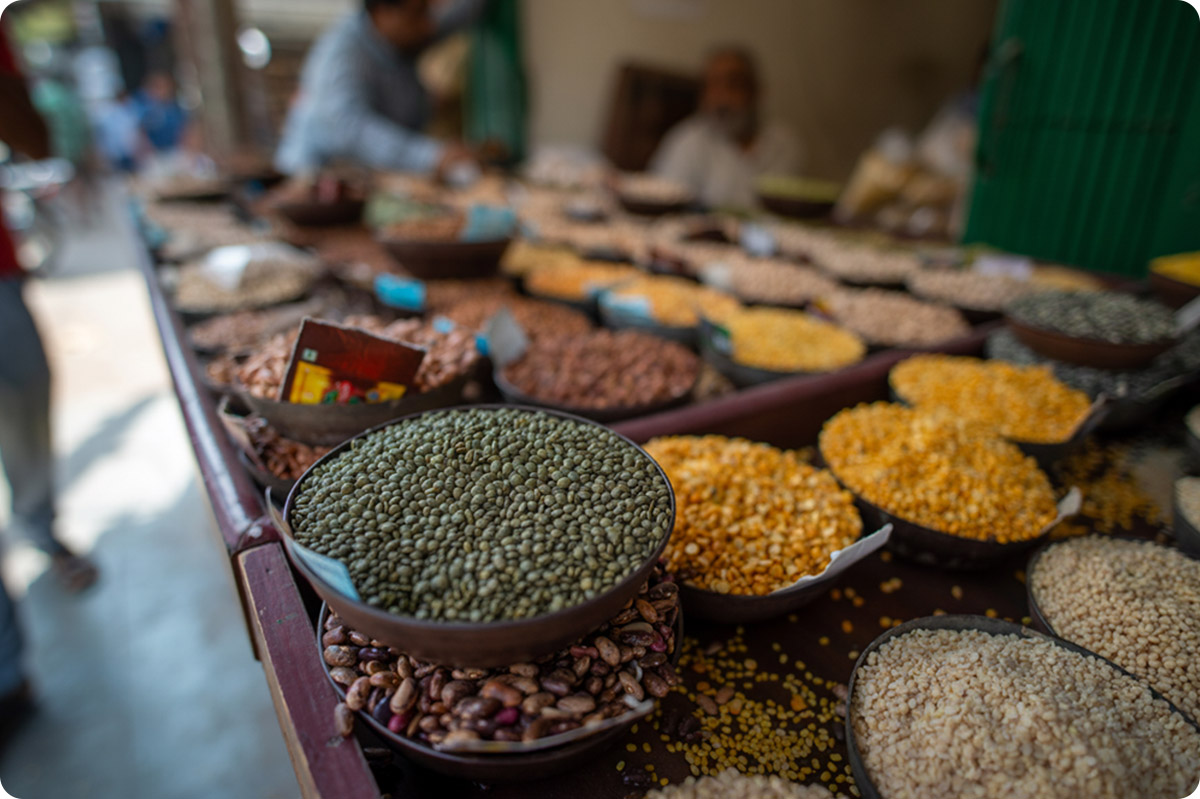
India is the world’s largest pulse consumer, accounting for roughly 27% of global consumption, with green lentils often used as a substitute for pigeon peas.
According to USImportData and NDTV, senators from North Dakota and Montana have encouraged the US administration to engage Indian leadership on pulse market access as part of broader trade discussions. Their argument centres on the importance of India as a potential growth market for US pulses and the economic pressures facing American farmers.
However, when viewed against the data, the issue is less about an immediate disruption of large US trade flows and more about future opportunity and positioning within a changing policy environment.
The prevailing media framing suggests a bilateral dispute centred on punitive action against US exports. The data and policy structure, however, point to a different reality: a uniform tariff introduced primarily for domestic market stabilisation, which has become politically salient because pulses are now part of a wider trade conversation.
As The Logical Indian notes in its editorial perspective, trade disputes between large democracies are often shaped as much by domestic political pressures as by economic fundamentals. In this case, the narrative emphasis on retaliation risks obscuring the broader context of India’s agricultural policy framework.
Pulses may represent a small share of overall US–India trade, but their prominence in current discussions highlights how agricultural commodities can become focal points during complex trade negotiations. Understanding the distinction between policy design and political reaction is essential for market participants, policymakers, and traders interpreting these developments.


Disclaimer: The opinions or views expressed in this publication are those of the authors or quoted persons. They do not purport to reflect the opinions or views of the Global Pulse Confederation or its members.