September 10, 2026
Chickpea markets are entering a period of shifting supply, uneven production and changing demand across major producing and consuming regions. Industry experts from Pakistan, Argentina, North America, Australia and China assessed the outlook for both desis and kabulis, with trade flows increasingly shaped by prices, logistics and regional demand.
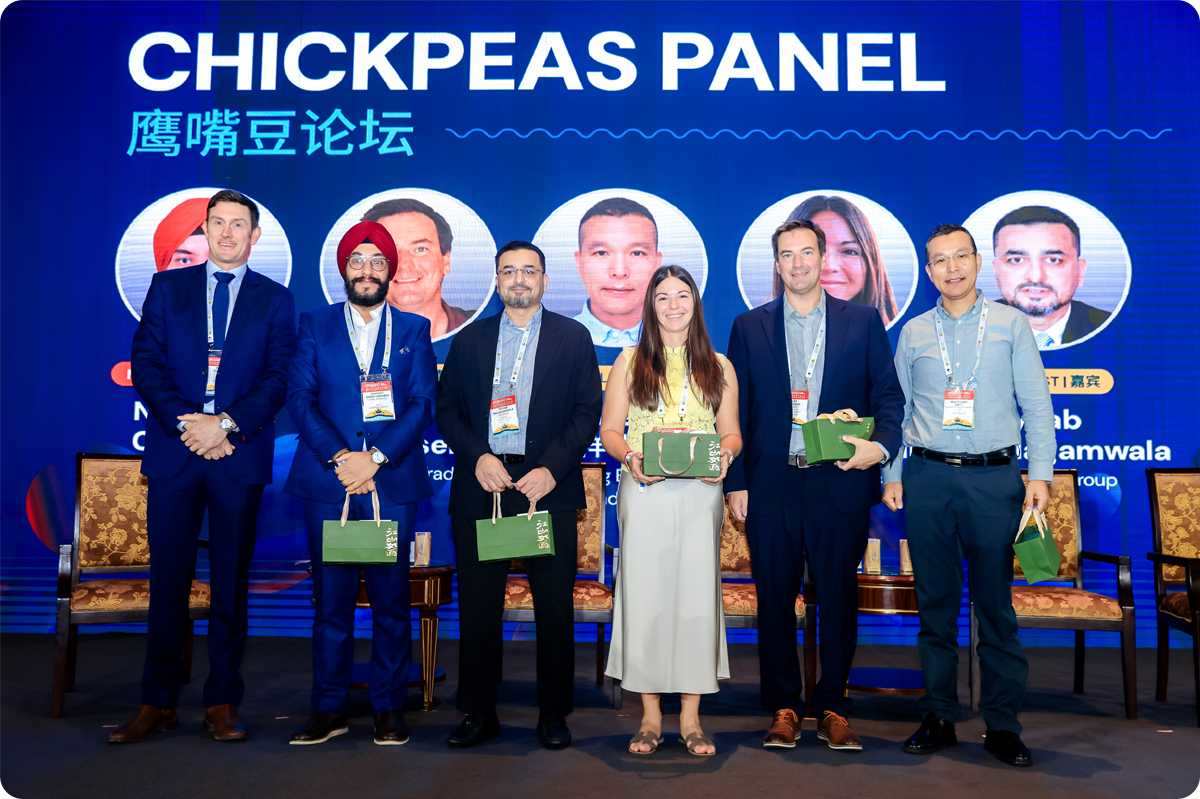
Australia’s 2026 chickpea crop is expected to fall to around 1.1–1.2 million tons, with dry conditions and farmers’ reluctance to sell adding to supply uncertainty. Pakistan, which consumes around 800,000 tons annually, is also facing a production shortfall and is expected to remain an active importer, while upcoming Ramadan demand could support prices later in the year. Russia has become an important source of desi chickpeas for Pakistan, although higher freight and insurance costs are complicating shipments. Argentina, meanwhile, sees potential to increase its share of the Pakistani market as Russian supply faces disruption, although current prices remain difficult for exporters and a new crop is still months away.
China’s chickpea imports are continuing to expand, reaching close to 30,000 tons in the first half of 2026 and potentially around 40,000 tons for the full year. India accounts for roughly 75% of imports, with Turkey supplying much of the remainder, while lower-priced 8 mm chickpeas are driving much of the growth. Panelists also pointed to expanding domestic consumption in snack foods, canned products, foodservice and online retail, as well as emerging applications in chickpea protein and fiber. With production declining in several major origins and demand patterns evolving across markets, the panel highlighted a chickpea trade increasingly sensitive to crop size, price competitiveness and logistics.
WATCH THE FULL PANEL DISCUSSION
READ THE FULL ARTICLE
Qingdao Pulses Congress / chickpea trade / kabuli chickpeas / desi chickpeas / Australia chickpeas / Pakistan chickpeas / Argentina chickpeas / China chickpea imports / India chickpeas / Russia chickpeas


Disclaimer: The opinions or views expressed in this publication are those of the authors or quoted persons. They do not purport to reflect the opinions or views of the Global Pulse Confederation or its members.